

Organic peppermint essential oil, 10 ml
8.00€
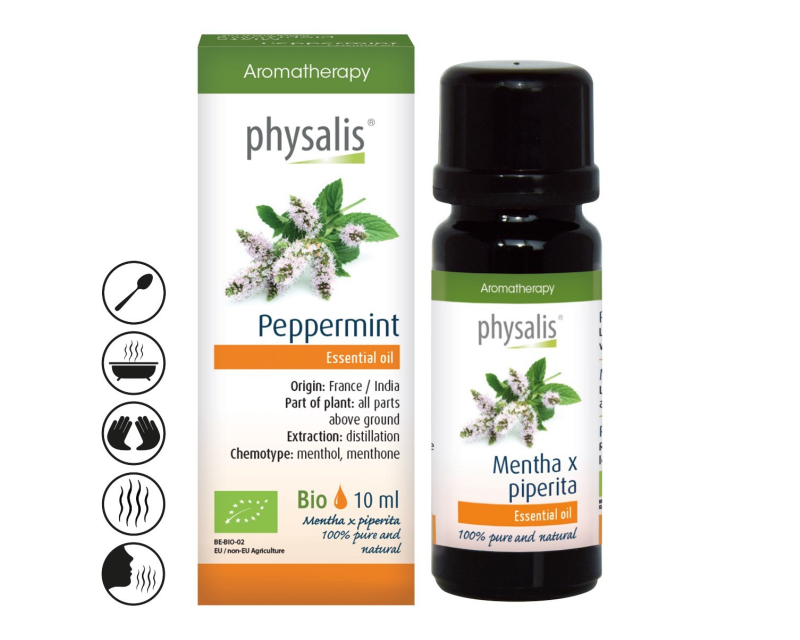
Organic peppermint essential oil, 10 ml
Peppermint (Mentha x piperita) essential oil is one of the most popular and well-known plant extracts in the world, widely used in food, cosmetics and aromatherapy. In aromatic phytotherapy, it is most valued for its tonic properties on the nervous system and digestion, as well as its antimicrobial, antipruritic and analgesic properties. The high levels of menthol and menthone in this essential oil give it a recognisably fresh, cooling peppermint scent and taste.
Plant part: all terrestrial parts of the plant
Extraction method: distillation
Chemotype: menthol, menthone
Usage:
On the skin: 5-10 drops in 10 ml of vegetable oil (coconut, almond, olive, etc.) for massage or bath.
Fragrance diffuser: 5-10 drops depending on personal preference and room size.
– Refreshing and cooling on hot summer days – smear on the base of the skull, add a few drops to a fragrance diffuser;
– In a moment of weakness on a trip or hike, apply a drop of oil to the sleeve and sniff;
– For a heavy head – smear clean oil on the eyes and the base of the skull (protect the eyes, do not apply near the eyes);
– To increase hair volume or soothe sensitive scalps – add a few drops to your shampoo; once a week for an oil mask or scalp massage – 2 drops per tablespoon of carrier oil (coconut, sesame or special hair oil);
– Peppermint oil is a great toning air freshener for the home or office – add 2-3 drops to a fragrance diffuser or floor soap. Do not use in people with central nervous system disorders!
Leaflet and instructions for use:Essential oils (essential or aromatic oils) are the fragrant, volatile components of herbs, flowers, fruits, seeds, etc. aromatic oils. In aromatherapy, pure essential oils have a positive effect on the body when inhaled, ingested or applied to the skin. Essential oils can have a powerful effect on mood and health: they can help relax, stimulate or calm the respiratory system and much more.
The following precautions should be followed to ensure safe consumption of essential oils: Essential oils are very concentrated! Sometimes it takes hundreds of kilograms of fresh plants to produce one kilogram of oil. They must be used carefully and correctly (we recommend consulting a phytotherapy specialist). INCORRECT USE CAN BE DANGEROUS!
1. Keep them out of the reach of children!
2. Never exceed the recommended doses!
3. Some oils are only suitable for external use, read the packaging!
4. Do not use on infants and children under three years of age!
5. Not recommended for use during pregnancy and breastfeeding!
6. Essential oils should be used with caution in cases of epilepsy, asthma and heart disease.
7. If you accidentally swallow a large amount of essential oil, drink the edible vegetable oil and contact the Poison Control Centre.
8. When administering essential oils orally, always mix them with vegetable oil.
9. Never apply or drip undiluted essential oils directly to the skin. Dilute with a little vegetable oil or a neutral cream, gel or shampoo; they can also be used in the bath.
10. A number of naturally occurring components in essential oils can cause allergic reactions in hypersensitive people (e.g. citral, d-limonene, linalool, geraniol, citronellol, etc.). Read the warnings on the packaging! Tip: In case of sensitive, allergic, skin, first add a drop of essential oil to a vegetable oil (such as sweet almond or coconut oil) and apply it to the inner part of the elbow. Wait 24 hours. If there are no signs of redness, itching or irritation, the oil can be used.
11. All citrus oils (made from the peel of bergamot, orange, lemon, grapefruit or mandarin) are photosensitive! Avoid sunlight and sunbeds for at least 12 hours after applying citrus oil to the skin!
12. Avoid contact with mucous membranes of the eyes and nose! If this happens, rinse thoroughly with clean water. If there is any irritation or a wound, seek medical advice.
13. Not for use as ear or eye drops.
14. Essential oils of thyme, oregano, clove and cinnamon are irritating. Do not ingest them, do not boil them and do not use these oils on the skin undiluted!
15. Regular use or consumption of essential oils is not recommended.
16. Essential oils are flammable and volatile. Do not store them at high temperatures!
17. Store essential oils in a cool, dark place, in a tightly closed bottle!
18. Poison Helpline: tel: 16662, from abroad by calling +372 7943794 or visit https://www.16662.ee/et.
Physalis® essential oils: quality guarantee:
– 100% pure, natural and organic, not chemically treated, not modified, not mixed with other essential oils, not diluted, not purified (= adjusted to meet standard formulation using chemicals or redistillation of essential oil for certain concentrated components).
– Checking the identity and quality of each batch by means of gas chromatographic analysis (composition of the oil and identification of the various constituents), physical checks (density, refractive index, optical rotation), organoleptic checks (odour, taste).
– Products labelled on the packaging: exact botanical species (Latin name), origin, plant parts used (leaves, flowers, twigs, seeds, roots, etc.), extraction method (slow and complete steam distillation under low or cold pressure), chemotype (biochemical specificity, specific components of each essential oil).
Oral use – although this use of essential oils can be very effective, we recommend not to experiment! We recommend that you only do this under the supervision of a therapist. It is important to be very familiar with the different oils, as some essential oils can be very dangerous if used incorrectly! We strongly advise against the use of essential oils in children (under 6 years) and pregnant women. Never use more than 2 drops at a time and never use more than twice a day.
Massage, bath, shower – essential oils are perfect for massage, relaxing in a soothing bath or a refreshing shower. They penetrate easily through the skin, providing positive effects. First dilute the oil with a small amount of vegetable oil (such as coconut or sweet almond oil). Recommendations: – Body massage: 1-2 drops in 10 ml of vegetable oil. – Face oil or cream: 2 drops in 10 ml of vegetable oil. – Aromatherapy bath: 6-10 drops in 10 ml of vegetable oil, neutral bath milk or bath foam; – Shampoo: 2-4 drops in 10 ml of vegetable oil. – Topical use: in some cases, much higher concentrations are used (> 20%); for example, on muscles and joints, anti-parasitic, etc. This type of use should only take place under the supervision of a therapist!
Steaming – essential oils add a pleasant fragrance to living and working spaces. It is preferable to use electric evaporators, which do not heat the oil and emit superfine vapours. It is sufficient to evaporate the oil for 15 minutes every hour.
Inhalations – a great way to soothe the throat and airways. Essential oils cleanse the nose and facilitate breathing. Add 2-3 drops of hot water to a bowl and inhale the steam for 5-10 minutes. Caution: avoid irritating oils!
Instructions for use – link to the manufacturer’s website with downloadable instructions for use (in English, Dutch, French, Spanish and Portuguese) Peppermint/Physalis – physalishealth.com
NB! The information provided here should not be interpreted as a recommendation for medical treatment or other health problems. We recommend that you make personal health decisions after evaluating different sources of information.
100% organic peppermint (Mentha x piperita) essential oil
Naturally contains d-limonene, linalool and eugenol.
Ingredients per 2 drops: mint 60 mg
-
Store in a cool, dark place, in a tightly sealed bottle and out of the reach of small children.
Related products

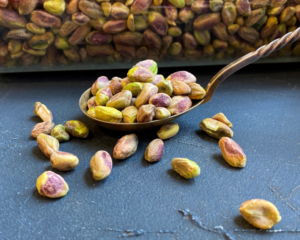
Shelled mild pistachios
From 3.80€
Organic black cumin seeds
From 1.05€
Organic fenugreek (methi) seeds
From 1.40€